


Plastic straws are out. The real decision for European bars is what replaces them without making the drink experience worse.
Paper was the fast answer. It was easy to source, easy to explain, and visibly non-plastic. But once it hit real service, the trade-offs became obvious. In cold drinks, long cocktails and busy hospitality environments, paper often stops feeling like a solution and starts feeling like a compromise.
That is where compostable straws enter the conversation. The problem is that “compostable” is often used too loosely. Buyers still need to understand the material, the disposal route, and whether the product actually performs in service.
Key takeaways
- Paper straws became the default replacement because they were easy to source, not because they were the best material for service.
- The main issue with paper is not ideology. It is performance in cold, long-service drinks and the effect that has on guest experience.
- “Compostable” only matters if the material claim is clear, documented and matched to real hospitality use.
- For many bars, the right buying decision is not the cheapest unit cost. It is the option that stays functional and on-brand from first sip to last sip.
Why bars moved away from plastic straws
The shift away from plastic did not happen because the market suddenly became idealistic. It happened because regulation, customer expectations and brand pressure all moved in the same direction.
At EU level, the Single-Use Plastics Directive changed the baseline. Certain single-use plastic items, including plastic straws, are no longer allowed on the market in the EU except in limited cases such as medical use. For hospitality businesses, that means plastic is no longer the easy default it once was.
At the same time, customers have become much less tolerant of visibly wasteful service items. Even when they do not ask detailed questions about materials, they notice what is in the glass. A straw is a small object, but it carries a disproportionate branding signal. Cheap plastic looks dated. Bad paper feels cheap. A well-performing plastic-free alternative feels considered.
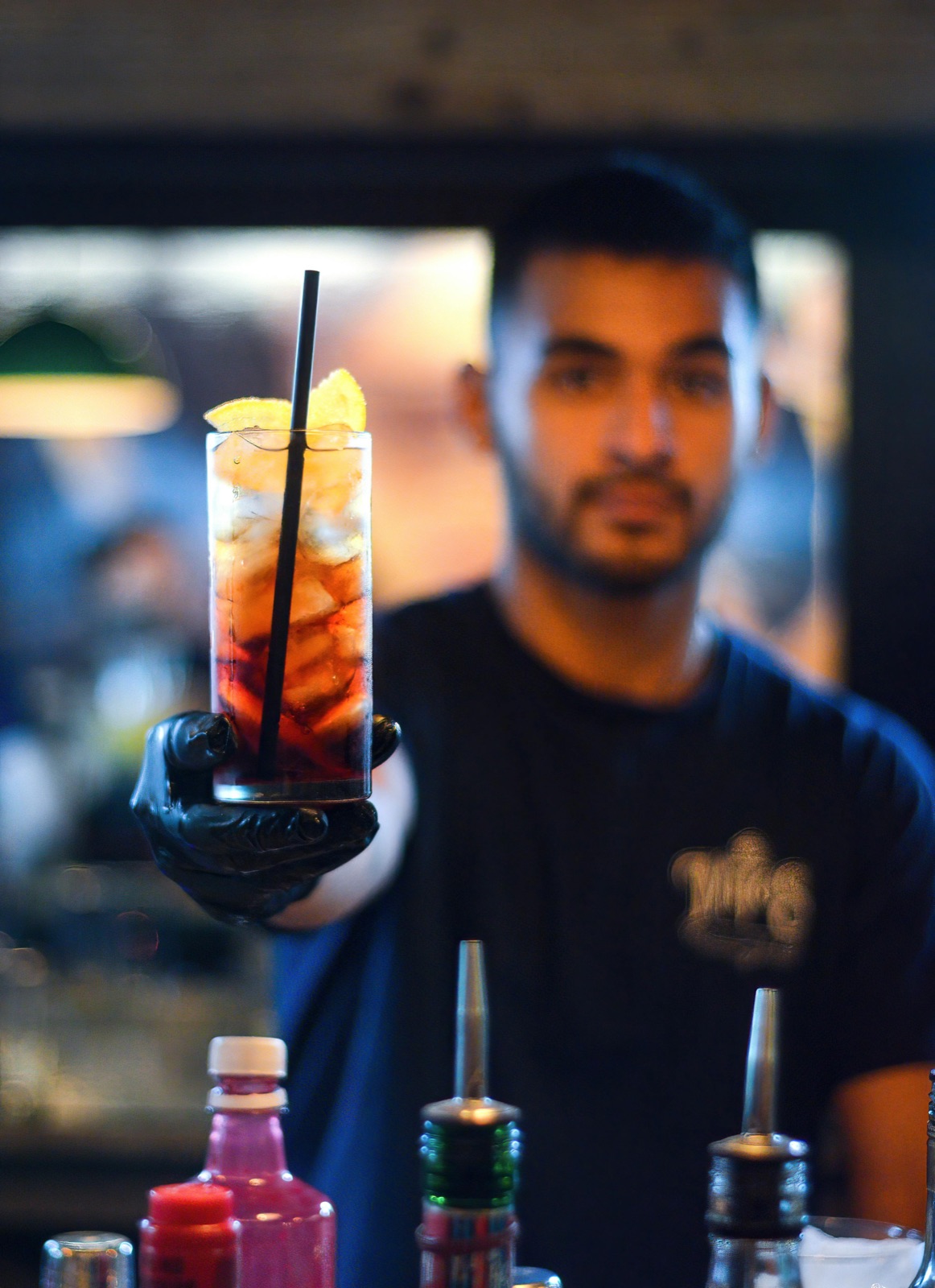
Why paper straws became the default replacement
Paper straws spread fast for obvious reasons. They were available early, simple to understand and usually inexpensive. For a buyer under time pressure, paper solved the immediate problem: replace the banned-looking plastic straw with something that appears more acceptable to customers and regulators.
They also carried a clear visual message. Paper looks familiar, fibre-based and visibly non-plastic. For many casual venues, festivals and event operators, that was enough to make the switch.
This is why paper became the standard transitional option across Europe. It was not always the best performer, but it was the easiest first move.
Where paper straws fall short in real service
The problem is that bar service is not a shelf test. It is an in-glass test.
In real use, paper straws often struggle in four areas:
1. Rigidity over time
In short, quick-consumption drinks, paper may be fine. In longer drinks, cold cocktails, iced beverages or any serve that sits on a table for a while, paper often softens. That affects not just function but perception. Once the straw starts collapsing, the customer notices immediately.
2. Mouthfeel
Even when paper does not fully fail, it can change the drinking experience. The texture is different. In some products, the user starts tasting or feeling the fibre before they finish the drink. That may be acceptable in low-friction casual service. It is not ideal in premium or design-conscious venues.
3. Consistency across drink types
The more varied the menu, the more exposed the weakness becomes. A straw that works in a soft drink may perform badly in an iced cocktail with citrus, a smoothie or a long-service table setting. Buyers do not need a material that works only in ideal conditions. They need one that behaves consistently across service reality.
4. Brand fit
If the venue is trying to look thoughtful, elevated or premium, a visibly degraded straw works against the experience. The issue is not just sustainability. It is service quality.
Buyer note
This does not mean paper straws are useless. It means they are often a compromise product, especially for bars that care about how the drink is experienced from first sip to last sip.
What “compostable” actually means
“Compostable” is not just a nicer word for “green.” It should point to a material and a disposal claim that can be understood and verified. It also does not mean the same thing as “biodegradable,” which is often used too loosely in product marketing.
When comparing straws, ask:
- What is the material?
- Is the product certified?
- Does the claim refer to industrial composting, home composting or both?
- Is the disposal guidance clear for the market you are serving?
For example, EN 13432 is a recognised European standard used in compostable packaging conversations. It matters because it gives buyers something more concrete than vague sustainability language.
At the same time, the category still needs care. Not every compostable straw is identical. Some are better positioned for industrial composting. Some may perform differently in liquid. Some may be technically compliant but disappointing in service.
So the right comparison is not “paper vs green.” It is “paper vs a certified, service-ready alternative.”
Paper straws vs compostable straws: the comparison that matters
| Criterion | Paper straws | Compostable straws |
|---|---|---|
| First impression | Familiar and easy to recognise | Can feel more premium if the material is stable |
| Rigidity in use | Often weakens over time in cold or long drinks | Usually chosen for better structural performance, but depends on material |
| Drinking comfort | Can become soft or fibrous | Can feel closer to a stable service tool |
| Long-drink performance | Often the weak point | Better candidate when drinks sit longer |
| Disposal messaging | Often assumed to be simple, but still needs correct guidance | Needs clear certification and disposal explanation |
| Suitability for premium bars | Can feel like a compromise | Stronger fit if performance and finish hold up |
| Buyer decision basis | Often chosen for convenience | Should be chosen on both compliance and service quality |
That last row matters most. Too many buyers still choose straws the way they choose office stationery: by unit cost and visual appearance. In hospitality, that is the wrong lens. A straw is part of the drink experience.

Which option makes sense for which venue
There is no universal answer, because not every venue serves in the same way.
Events and fast casual service
If drinks move quickly and the service window is short, paper can still be acceptable. For some event formats, the convenience and cost profile may outweigh the performance downside.
Cocktail bars and premium venues
This is where paper starts losing ground. If the drink sits longer, if presentation matters, or if the venue is intentionally building a premium guest experience, a more stable compostable option usually makes more sense.
Cafes, smoothies and mixed menus
The broader the drink range, the more important consistency becomes. When one venue serves iced coffee, cocktails, juices and soft drinks, buyers need something that holds up across conditions instead of working only in the easiest case.
What to ask a supplier before ordering
Before choosing any plastic-free straw, ask five practical questions:
- What material is it exactly?
- What certification or compliance documents can you share?
- How does it behave in cold drinks and long service?
- Which sizes are available for cocktails, soft drinks, smoothies or bubble tea?
- Can you supply reliably across the EU without stock gaps?
This is where many listings fall apart. They sell a generic environmental promise, but give no operational confidence.
ChefPac’s position is built around that gap. Its lignin straws are plant-based, plastic-free and positioned for service performance, not just shelf appeal. The current site messaging is clear: EU 10/2011 food-contact compliant, DIN EN ISO 14855 controlled-condition testing, and tested in cocktails for 8+ hours. That is the kind of information buyers need, because it speaks to both compliance and actual use.
The practical takeaway for European bars
Paper straws were a logical first replacement for plastic. For some venues, they may still be good enough. But if you care about guest experience, drink presentation, service consistency and premium feel, “good enough” is usually not the right benchmark.
The better question is this: what performs well in the drink, aligns with EU requirements, and still fits the way your venue wants to be perceived?
If you want the material-level explanation behind that shift, read why lignin straws perform differently from paper straws.
FAQ
Are paper straws compostable?
Some are, but not all paper straws should be treated as equivalent. Materials, coatings, adhesives and disposal routes matter. Buyers should always check the actual product documentation instead of assuming that paper automatically means simple compostability in every case.
What is the difference between biodegradable and compostable straws?
“Biodegradable” is often used broadly and can be vague in marketing. “Compostable” should point to a more specific end-of-life claim, ideally backed by recognised certification. The two terms are not interchangeable.
Are paper straws good for cocktails?
They can work in short-service contexts, but many bars find that paper straws lose rigidity too quickly in cold or long-sitting drinks. That is why performance testing matters more than category labels.
What straws work best for bars and hospitality?
The best option is the one that balances compliance, drinking comfort, stability in service, supply reliability and venue positioning. For many bars, that means moving beyond generic paper and toward a more stable compostable material.
How should bars choose plastic-free straws in Europe?
Start with material clarity, documentation, service performance and supply reliability. Do not choose only on price or visual appearance. Test in real drinks before placing larger orders.
Ready to test a better alternative?
If the goal is to replace plastic without making the service experience worse, start with a straw that is built for bars, not just for shelf appeal.


